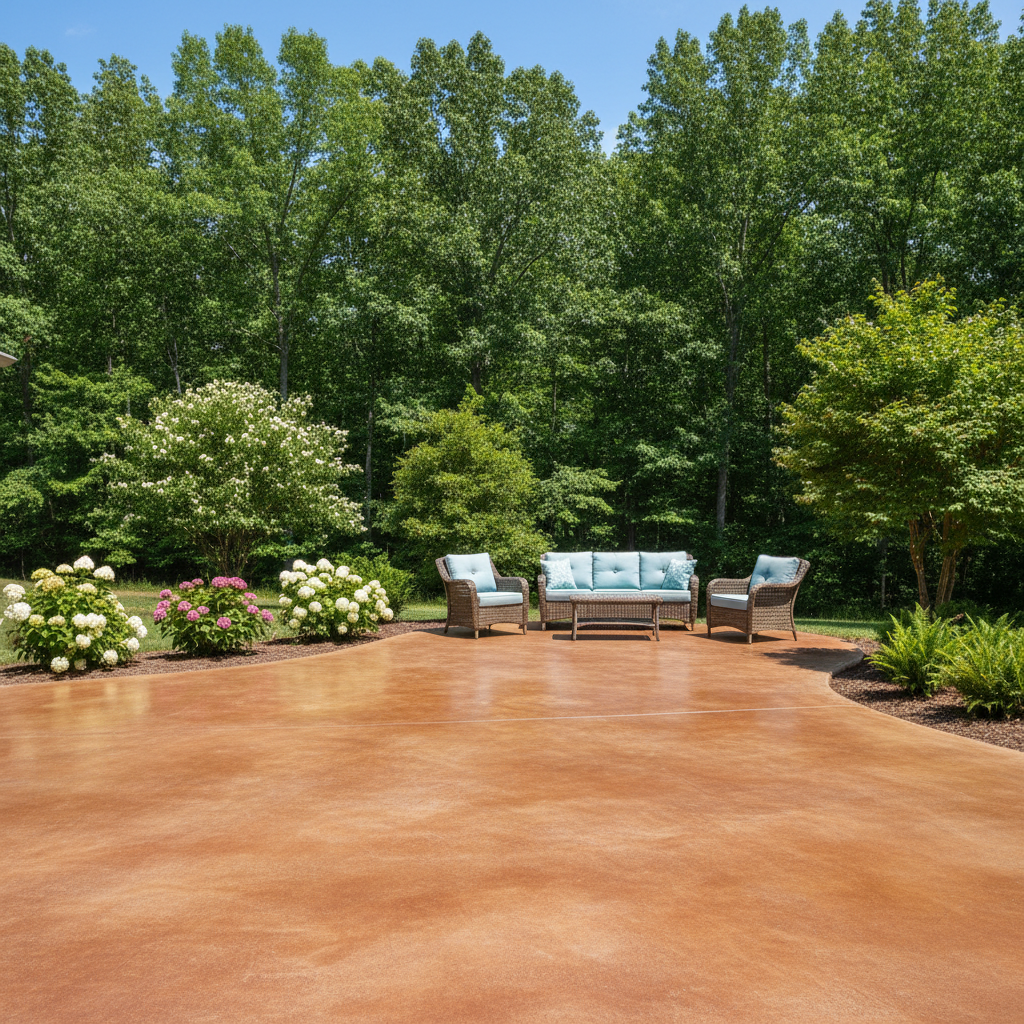
So, you've got some gorgeous stained concrete. Maybe it's your patio, a walkway, or even your interior floors. It looks fantastic, right? That rich color, the unique patterns – it really adds a lot of character. But here's the deal: to keep it looking that good for years to come, you can't just set it and forget it. Especially not here in Sevierville, where our weather can be a real challenge.
Extend the Life of Your Stained Concrete
The biggest thing you can do to make your stained concrete last is to protect that finish. Think of it like the clear coat on your car; it's what's taking the abuse, not the color underneath. When we finish a stained concrete job at Omega Concrete, we always apply a high-quality sealer. That sealer is your first line of defense against everything from UV rays to spills and foot traffic.
The sun in East Tennessee can be brutal, especially in the summer. Those long, hot days will fade unsealed or poorly sealed concrete faster than you'd believe. A good sealer has UV inhibitors that help prevent that fading. It also creates a barrier against moisture, which is super important with our humid summers and wet winters. Water penetration can lead to all sorts of issues down the road, including efflorescence (those white powdery deposits) or even delamination if it freezes and thaws repeatedly.
Another key to longevity is proper initial curing. If the concrete wasn't allowed to cure correctly before staining and sealing, you're starting with a weaker foundation. That's why choosing an experienced contractor matters. Once it's done right, though, your main job is maintaining that protective sealer layer.
Regular Maintenance: What You Need to Do
Keeping your stained concrete looking sharp isn't rocket science, but it does require a little attention. Most of it comes down to basic cleaning and knowing when to re-seal.
- Clean Regularly: For outdoor stained concrete, a good sweep or leaf blower to clear off dirt, leaves, and debris is a must. For indoor floors, regular sweeping and damp mopping with a pH-neutral cleaner is usually all you need. Don't use harsh chemicals like bleach, ammonia, or anything abrasive. Those will strip your sealer and dull the finish. I've seen folks accidentally ruin a perfectly good stained floor with the wrong cleaner, so be careful.
- Address Spills Quickly: Just like with any other surface, spills happen. The quicker you wipe up oil, grease, wine, or anything acidic, the less chance it has to penetrate the sealer and stain the concrete itself.
- Protect from Scratches: On interior floors, use felt pads under furniture legs. If you're moving heavy appliances, use a dolly or put down a protective layer like plywood. For outdoor patios, consider rubber feet on furniture or area rugs in high-traffic spots.
- Re-seal When Needed: This is probably the most crucial maintenance step. How often depends on traffic and exposure. For a high-traffic outdoor patio that gets direct sun and rain all year, you might need to re-seal every 1-3 years. A covered porch or an interior floor might go 3-5 years, or even longer. You'll know it's time when the surface starts to look dull, or if water no longer beads up on it. A simple test is to spill a little water; if it soaks in instead of beading, it's time for a new coat of sealer.
When you re-seal, make sure the surface is thoroughly clean and dry. You don't want to seal in dirt or moisture. Use a compatible sealer – if you're not sure what was used originally, it's best to consult with a professional. Different sealers have different application methods and chemical compositions.
Warning Signs of Problems
You're not just looking for dullness; there are other things that tell you something's not right or that your sealer is failing.
- Fading Color: If the vibrant color you loved is starting to look washed out, especially in areas exposed to direct sunlight, your sealer's UV protection is likely gone.
- White Hazing or Peeling: This is often a sign of moisture getting trapped under the sealer, or an incompatible sealer being used. It can also happen if the sealer was applied too thick or in improper conditions (like too hot or too humid).
- Cracks or Chips: While not directly related to the stain or sealer, new cracks or chips in the concrete itself can compromise the integrity of the stained finish. Water can get into those cracks and cause further damage.
- Stains That Won't Come Out: If you've got persistent stains even after cleaning, it means the protective layer is gone in that spot, and the concrete itself is absorbing the spill.
Catching these issues early can save you a lot of headache and expense down the road. Don't let a small problem turn into a big one.
When to Call a Professional
Look, I'm all for DIY, but some jobs are just better left to the pros. When it comes to stained concrete, here's when you should definitely pick up the phone:
- Major Sealer Failure: If your sealer is peeling, flaking, or turning white over a large area, that's not a simple re-coat. It often means the old sealer needs to be stripped off completely before a new one can be applied, and that's a messy, labor-intensive job that requires specific chemicals and equipment.
- Deep Stains or Discoloration: If you've got stains that won't budge, or large areas of discoloration in the concrete itself, a professional might be able to do some spot treatment or re-staining. It's not always possible to perfectly match, but we can often improve it significantly.
- Cracking or Structural Issues: If you're seeing new or expanding cracks, especially if they're wide or uneven, that's a structural issue with the concrete slab itself. That needs to be assessed by someone who understands concrete repair, not just surface maintenance.
- You're Unsure About Products: If you don't know what kind of sealer was used previously, or you're not confident in choosing the right new product, call us. Using the wrong sealer can cause more problems than it solves.
- You Don't Have the Time or Tools: Stripping and re-sealing a large area of stained concrete is a big project. If you don't have the time, the right sprayer, or the patience, it's worth hiring someone.
Here in Sevierville, with our mix of hot summers, freezing winters, and sometimes heavy rain, your concrete takes a beating. From the clay soils that can shift a bit under foundations to the constant freeze-thaw cycles, a good, well-maintained sealer is your best friend. Don't neglect your stained concrete; a little bit of care goes a long way in keeping it beautiful for years. If you've got questions or need a hand, you know who to call.